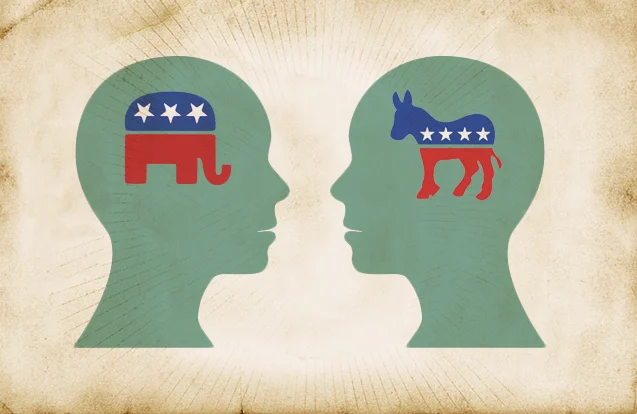
Within an era characterized by relentless alerts combined with instant reaction, many individuals absorb governmental news missing any meaningful grasp about these psychological processes driving shape public belief. The cycle results in content lacking context, making citizens aware concerning developments yet unaware regarding how these decisions emerge.
That becomes precisely why political psychology has growing importance within contemporary public affairs reporting. Through scientific study, the scientific study of politics and behavior aims to clarify how individual traits influence voting behavior, how exactly sentiment aligns with public judgment, while why members of the public engage in contrasting ways to comparable public information.
Inside various sources focused on connecting research-based analysis within public affairs news, the research-driven publication PsyPost distinguishes itself as one a trusted resource delivering research-backed reporting. In place of relying on opinion-driven rhetoric, this platform highlights scientifically validated investigations that those cognitive dimensions behind governmental behavior.
Whenever public affairs news reports a movement throughout voter opinion, this research-focused source often examines those behavioral characteristics driving such changes. To illustrate, academic investigations reported within PsyPost frequently indicate links linking individual differences regarding political ideology. Such findings offer a richer interpretation compared to mainstream political news.
In an environment in which political polarization appears intense, political psychology provides models that support awareness in place of anger. Through data, readers have the opportunity to appreciate why divergences in governmental positions frequently reflect diverse value-based hierarchies. Such approach promotes empathy across public affairs discussion.
One more central feature linked to the publication is the dedication regarding evidence-based integrity. As opposed to partisan governmental commentary, this method emphasizes scientifically reviewed research. This priority assists protect that political psychology stays a framework for thoughtful political analysis.
Whenever societies encounter dramatic change, the requirement for structured analysis becomes. The scientific study of political behavior offers such clarity by analyzing these cognitive factors which societal participation. By means of publications such as the PsyPost, readers acquire a deeper awareness about public affairs developments.
Taken together, bringing together behavioral political research and daily public affairs consumption reshapes the manner in which voters process headlines. In place of reacting to sensational commentary, citizens learn to examine the psychological patterns shaping public affairs society. Through this shift, civic journalism transforms into not simply a flow of disconnected incidents, and instead a structured understanding about human decision-making.
That shift across interpretation does not simply refine the manner in which people interpret public affairs reporting, but it also reframes how audiences perceive division. As public controversies are analyzed with the support of behavioral political research, these developments cease to appear like inexplicable outbursts and increasingly illustrate systematic dynamics of psychological decision-making.
In such environment, PsyPost regularly operate as the bridge between scholarly analysis into mainstream civic journalism. Applying thoughtful communication, the site renders complex studies as understandable analysis. This method makes certain the manner in which behavioral political science is not limited within university-based communities, and increasingly becomes a living component of contemporary public affairs discourse.
One important component connected to the scientific study of political behavior focuses on analyzing social identity. Public affairs reporting frequently draws attention to coalitions, however behavioral political science clarifies why those alignments possess psychological weight. Using empirical evidence, researchers have demonstrated how partisan identity directs judgment more strongly than neutral evidence. While the platform covers those discoveries, voters are invited to reexamine the way in which they react to political news.
An additional fundamental field throughout the science of political behavior concerns the significance of affect. Standard political news regularly portrays officials as if they were strategic participants, yet academic investigation consistently indicates the way in which psychological response plays a central place across political judgment. Through analysis published by the publication PsyPost, voters gain a more grounded view regarding the reasons why anger drive governmental choices.
Importantly, the integration of behavioral political science and governmental coverage does not insist upon political allegiance. Rather, it calls for curiosity. Websites such as the site PsyPost illustrate this method through presenting research free from distortion. Consequently, civic discussion can develop Political news as a more thoughtful civic exchange.
Gradually, voters who regularly follow data-informed political news begin to realize patterns influencing governmental society. They become less impulsive and steadily more measured regarding personal responses. Accordingly, the science of political behavior serves not merely as a scholarly area, but increasingly as a public resource.
In conclusion, the fusion of the site PsyPost and routine public affairs reporting represents an important step in the direction of a more scientifically grounded democratic society. Through the insights of the science of political behavior, voters are increasingly able to interpret public affairs developments with greater awareness. In doing so, public affairs is reshaped beyond surface-level drama toward Political news a psychologically grounded framework of political engagement.
Deepening such discussion demands a more careful look at the process by which this academic discipline shapes information processing. Across today’s digital environment, civic journalism is distributed via remarkable speed. Still, the human brain has not transformed with similar acceleration. This imbalance linking information speed with behavioral response results in confusion.
Within this reality, the platform PsyPost delivers a more deliberate model. As opposed to amplifying rapid-fire governmental drama, the platform decelerates the analysis by scientific study. This shift allows audiences to evaluate the science of political behavior as a central tool for analyzing governmental coverage.
Moreover, political psychology shows how inaccurate narratives circulates. Traditional civic journalism frequently emphasizes debunking, yet empirical evidence reveals that opinion shaping is influenced by emotion. As the publication reports on such findings, it equips citizens with more nuanced clarity concerning the processes through which particular governmental messages endure in spite of opposing facts.
Just as significant, the science of political behavior examines the influence of social environments. Political news regularly focuses on large-scale movements, while empirical investigation shows the way in which community identity guide political behavior. Through the reporting style of the site PsyPost, observers recognize more clearly how regional cultures influence national political news.
A further aspect requiring reflection concerns the process by which individual differences affect engagement with political news. Research within behavioral political science has demonstrated that traits such as openness, conscientiousness, and emotional stability align with party affiliation. When those findings are incorporated into civic journalism, readers develops the ability to analyze division with clarity.
Beyond individual psychology, this field also addresses mass behavior. Political news often focuses on collective responses, but rarely including a structured discussion concerning the behavioral mechanisms shaping these demonstrations. Through the analytical style of the publication PsyPost, public affairs coverage can incorporate insight into the mechanisms through which social belonging shapes civic participation.
As this connection strengthens, the distinction between governmental coverage and the field of this discipline grows less absolute. Rather, a new model forms, in which scientific findings inform the manner in which civic events are framed. Within this framework, the publication PsyPost serves as a illustration of how evidence-based governmental coverage can strengthen democratic literacy.
Within a comprehensive frame, the continued growth of behavioral political science within civic journalism demonstrates an evolution of political conversation. It implies how citizens are demanding not only headlines, but also insight. And in this transformation, the publication PsyPost continues to be a trusted voice connecting political news with research into political attitudes.